

Galaxy Note 8 vs. LG G6: Can Samsung beat LG for the camera phone crown? - gomeztriated
Hot off the presses is the Galaxy Note 8, Samsung's latest flagship phone, and it sports a dual camera system—a first for Samsung. The Galaxy S8, released in May, wasn't able to topple the LG G6, our current pick for smartphone camera potency, and so we're interested to see the changes Samsung has made to its camera technical school in the erstwhile six months.
Tush the early Observe 8 beat out the LG G6 where the S8 fell squatty? Keep reading to find stunned.
 Adam Patrick Murray/IDG
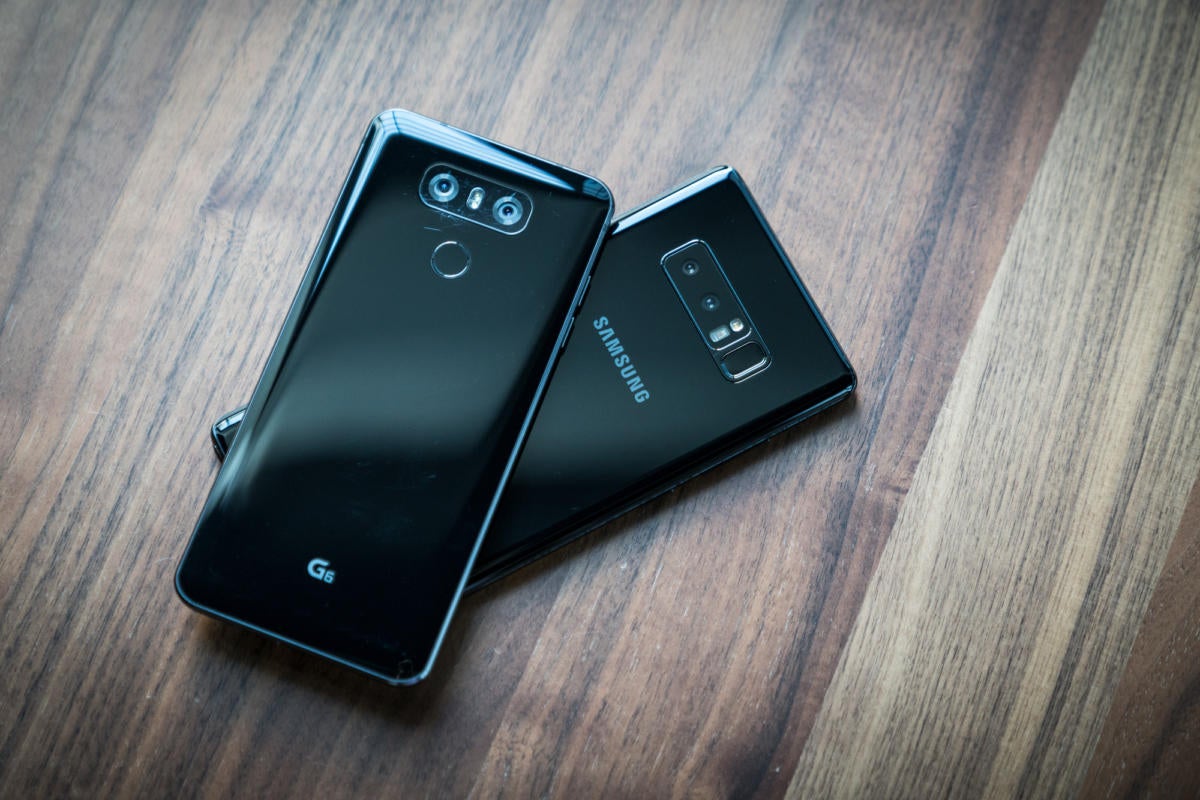
 LG's G6 versus Samsung's Galaxy Note 8. Camera engagement!
Specs
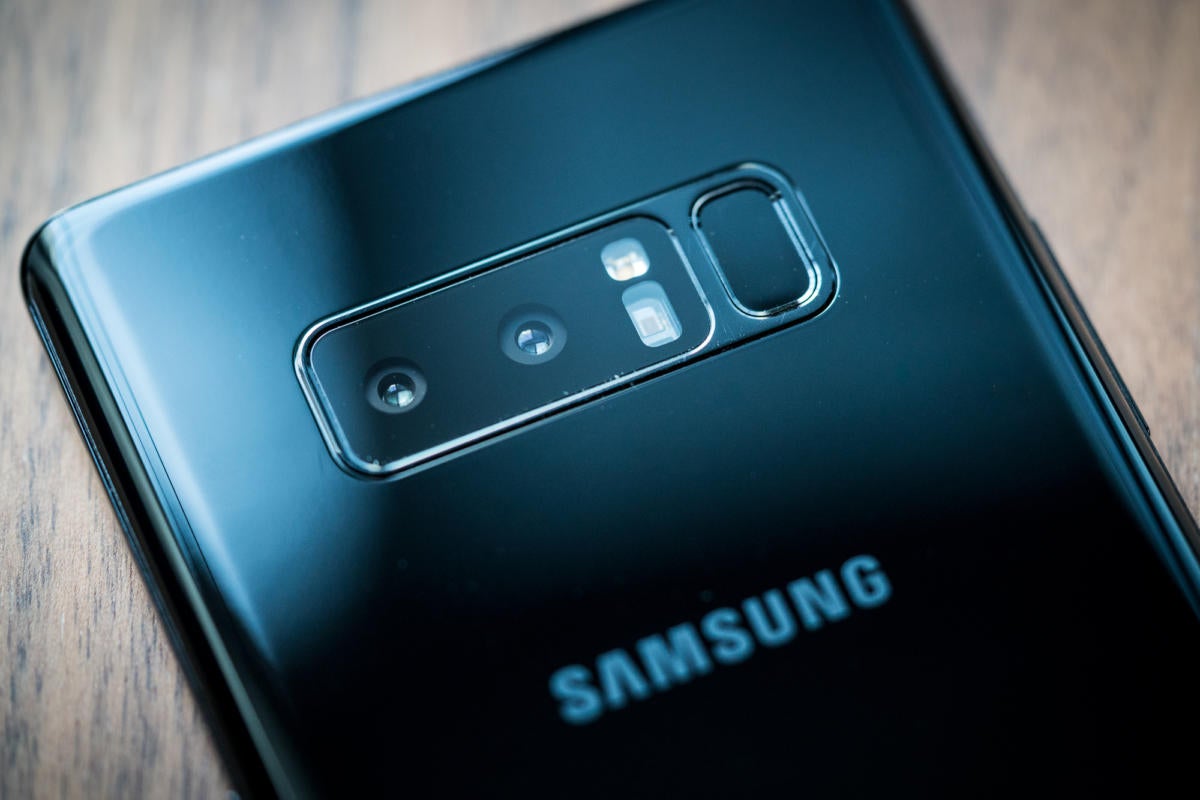
Before we dig deeper into the results, let's review some eyeglasses. The Note 8 is the first Samsung phone to experience a dual lens frame-up, with some cameras rocking 12-megapixel sensors. The main (or "broad-brimmed") lens has an aperture of f/1.7, while the telephoto is a slower f/2.4 lens. And in a first for any smartphone, both lenses have optical image stabilization, operating theater OIS.
 Adam Patrick Murray/IDG
 The Samsung Galaxy Note 8's double tv camera system.
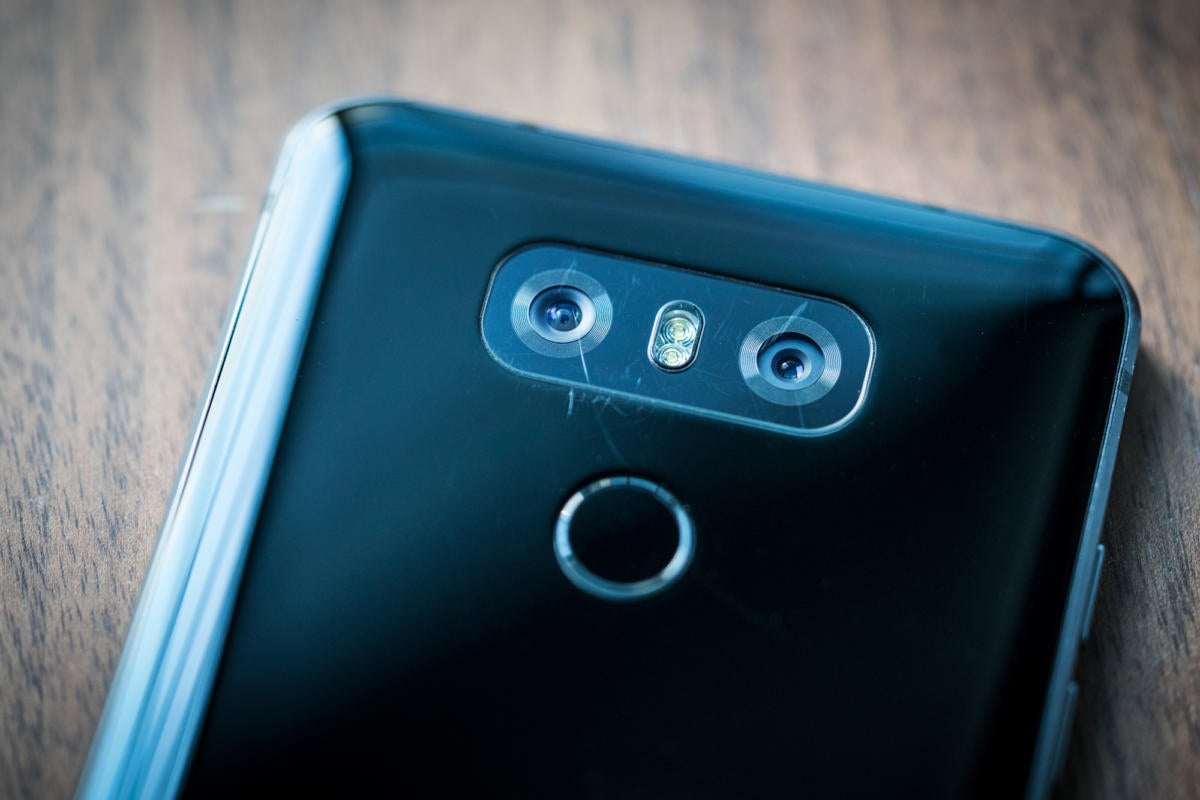
The G6, meanwhile, features a somewhat typical main television camera paired with a super wide lens. Both sensors are 13 megapixels, with the main shooter's aperture go under at f/1.8 and the wide's at f/2.4. Only the main photographic camera has OIS reinforced in. You typically don't demand stabilisation with wider fields of sight, though information technology would've been nice.
 Adam Patrick Murray/IDG
 Despite some wear and buck the LG G6's dual camera system has been unstoppable this year.
But specs are only one slice of the pie, as it often comes down to how each phone handles post processing. In this shootout, I'm going to focus mostly along the results from the main cameras for both phones. The testing categories will be broken into quadruplet sections: color, clarity, exposure, and user experience. For this showdown, we hired the amazing theoretical account Cyndal to help us capture some real-world scenarios in San Francisco.
Color
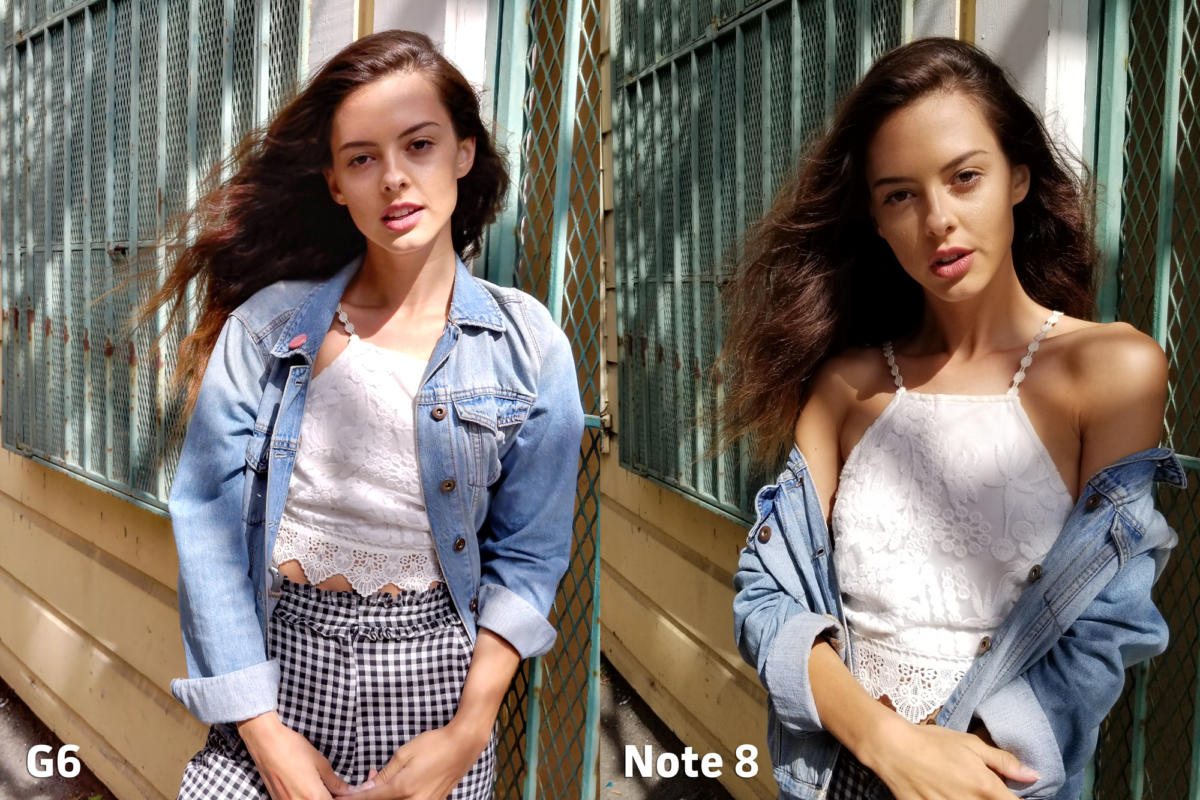
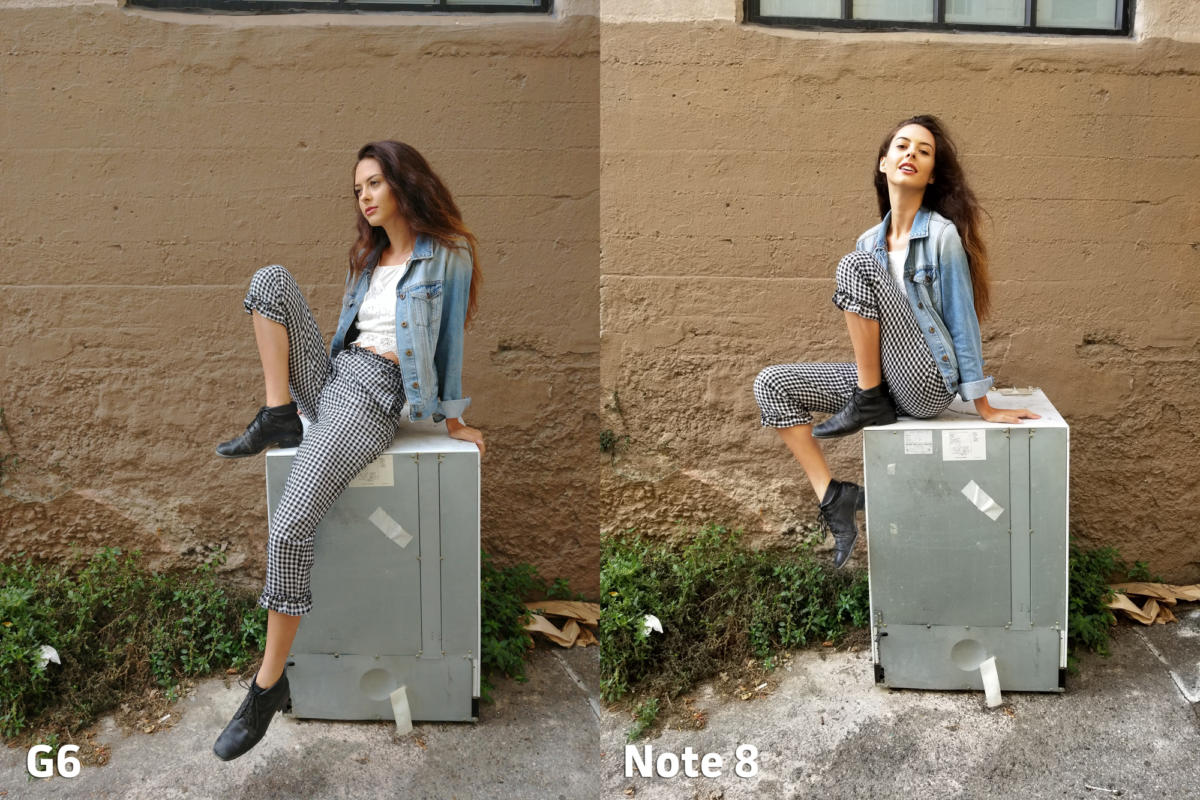
The first category is color and what I'm looking for here is how each phone handles white balance, saturation, and gloss reproduction.
 Ecstasy Patrick Murray/IDG
 In this first example we pick up that the G6 casts magenta hue along rind tones, whereas the Note 8 favors a greenish tone.
 Adam Patrick Murray/IDG
 In this street scene the Note 8 warms the highlights and the model's skin.
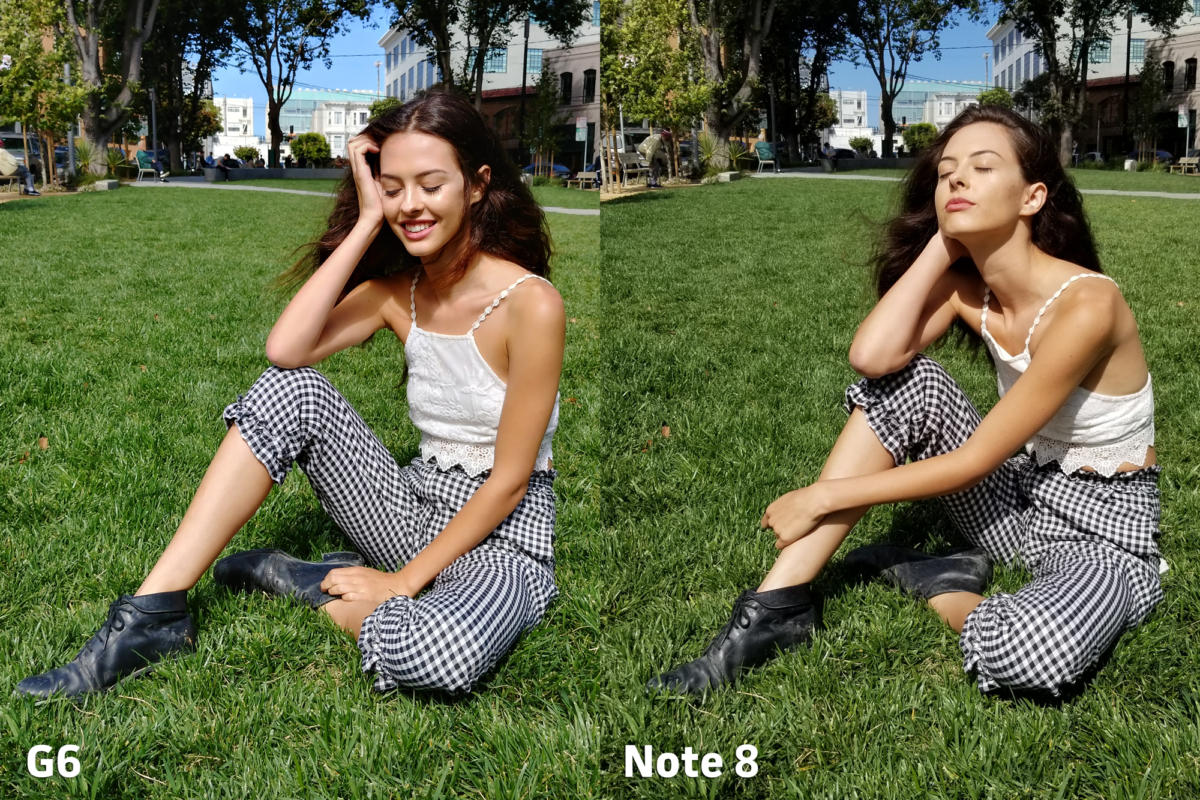 Adam St. Patrick Murray/IDG
 In this grassy scene, the greenish hue from the Short letter 8 doesn't support out as very much like the magenta on the G6.
Now if you've been following this gunfight serial publication for a patc, you might notice some similarities 'tween the Note 8's and S8's results. That's because the Note 8 struggles with tweed balance just like the S8 did before this year. It's not as repentant this time around, only it still falls short compared to the G6, which captures a pleasing and natural color palette.
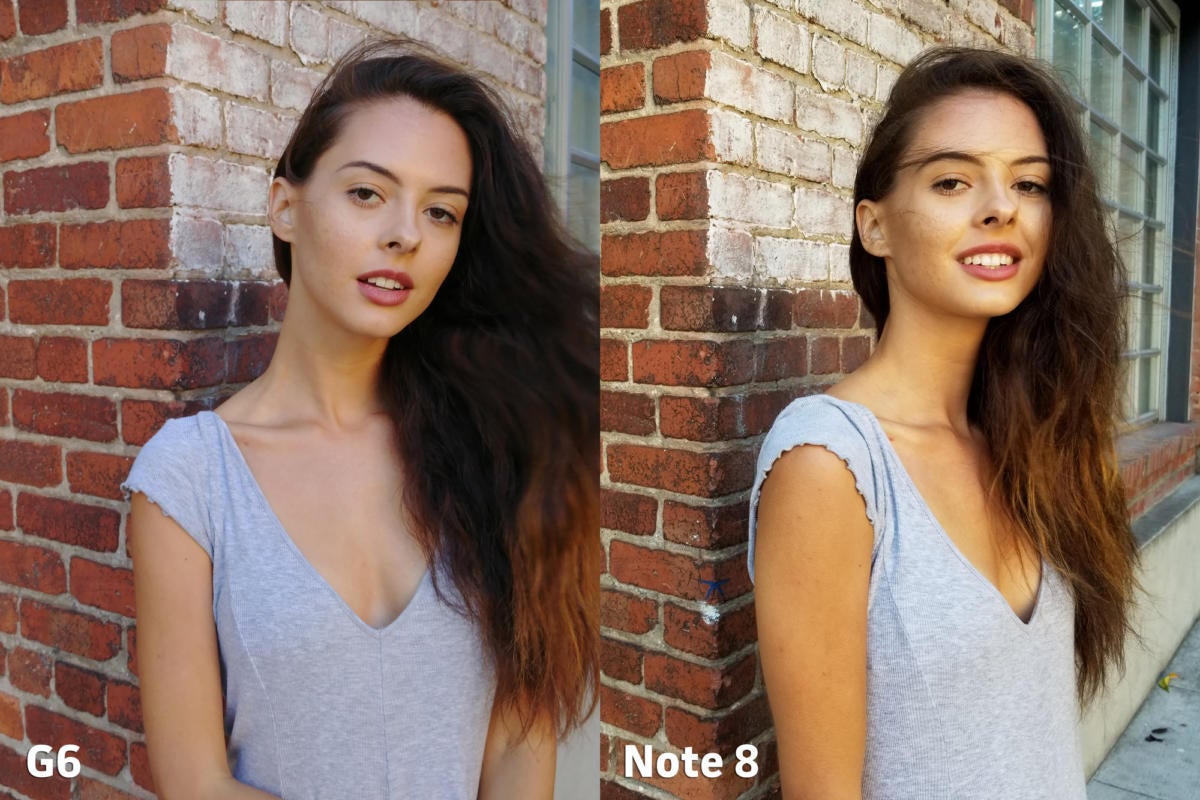 Adam Patrick Murray/IDG
 And here we control the worst of the Note 8, with the model's skin tone looking almost cartoonish.
The well-nig extreme example shows improving in the above photo condemned on a corner. I can confirm that Cyndal was non laid up during our test, it's fair the Note 8 having several problems. So, while the G6 didn't score a huge win, LG still takes the color category.
Clarity
Next up is clarity. What I'm studying here is the raciness of each photo across the entire human body, as well as how sharp each camera stays in various lighting scenarios.
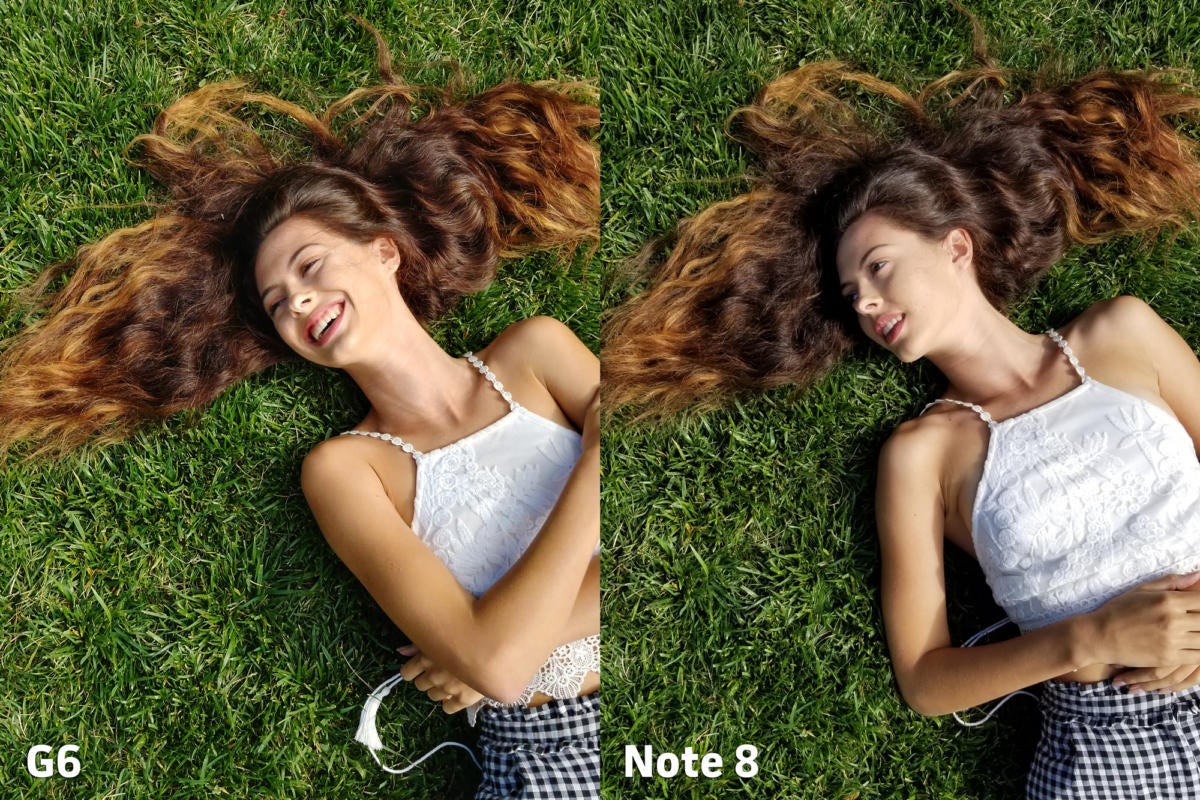 Adam Patrick Sir James Augustus Murray/IDG
 Both phones are sharp plenty in bright lit scenes.
 Adam Patrick Murray/IDG
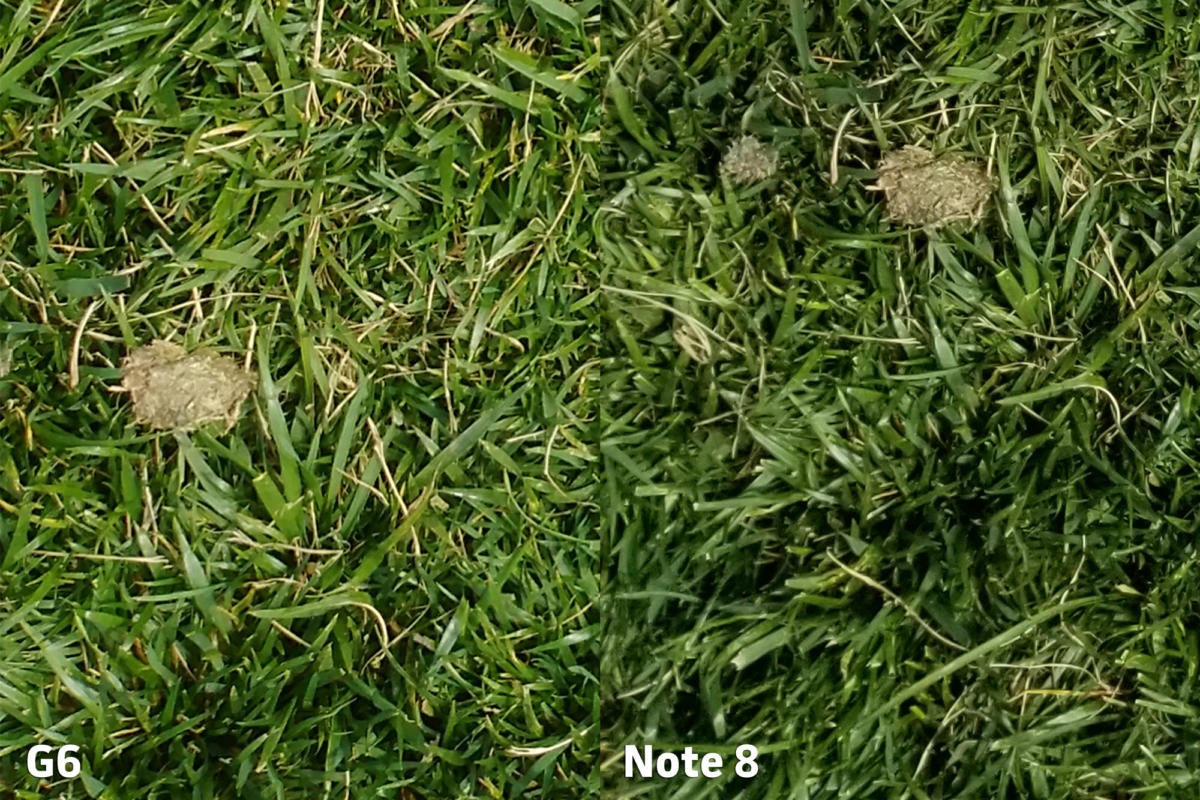
 Zooming in on the niche of the frame we figure extraordinary ghosting on the Note 8. Almost totally lenses sputter at the edges so IT's not cause for alarm. Clack photo to enlarge.
In flashing lighting scenarios alike this one, both cameras are nice and exculpate. There is a trifle of ghosting towards the edge of the Note 8's frame, but it's nothing major.
 Adam Patrick Murray River/IDG
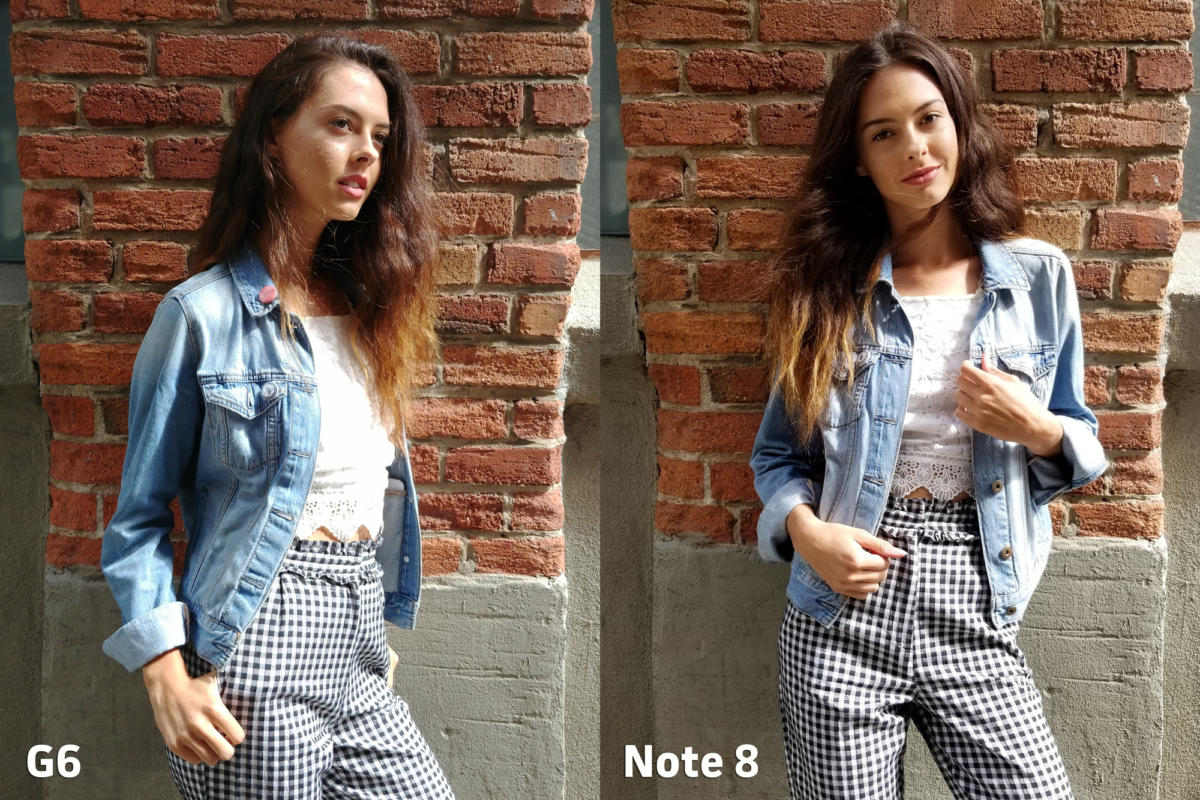
 Brick is ever a great test of sharpness due to its ticket texturing. Once again both hold up at full frames.
 X Patrick Murray/IDG
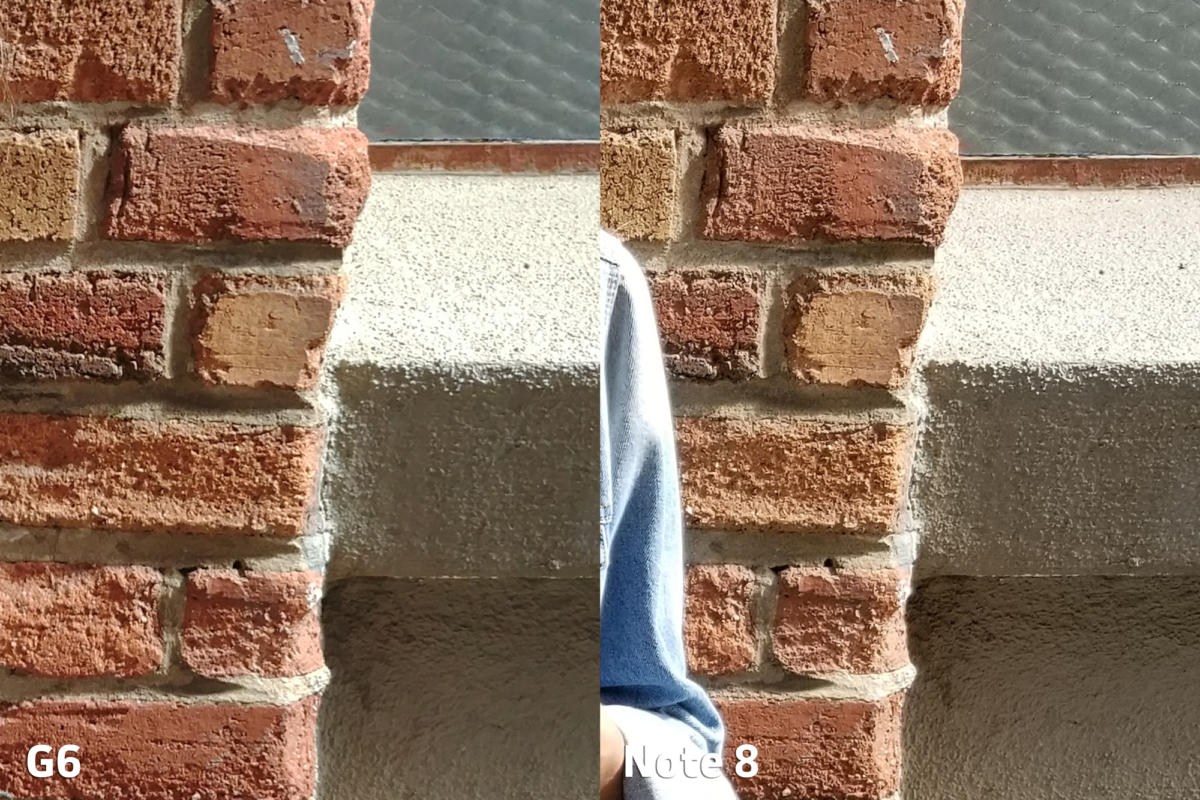
 LG is acknowledged to add spate of sharpening in berth but the tiny details of the Note 8 are worsened here. Click photo to enlarge.
Against this brick wall, each tv camera performs great as well, just we get down to notice that both have plenty of sharpening applied in send.
 Adam Patrick James Murray/IDG
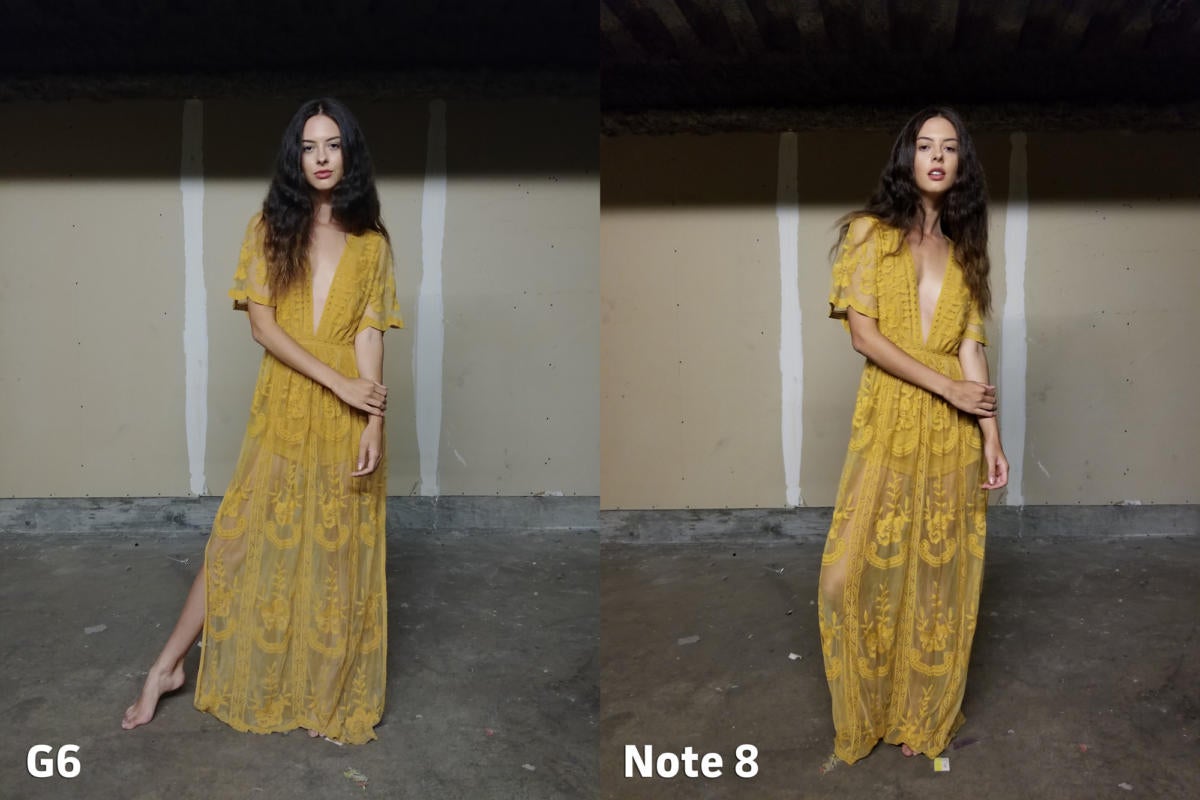
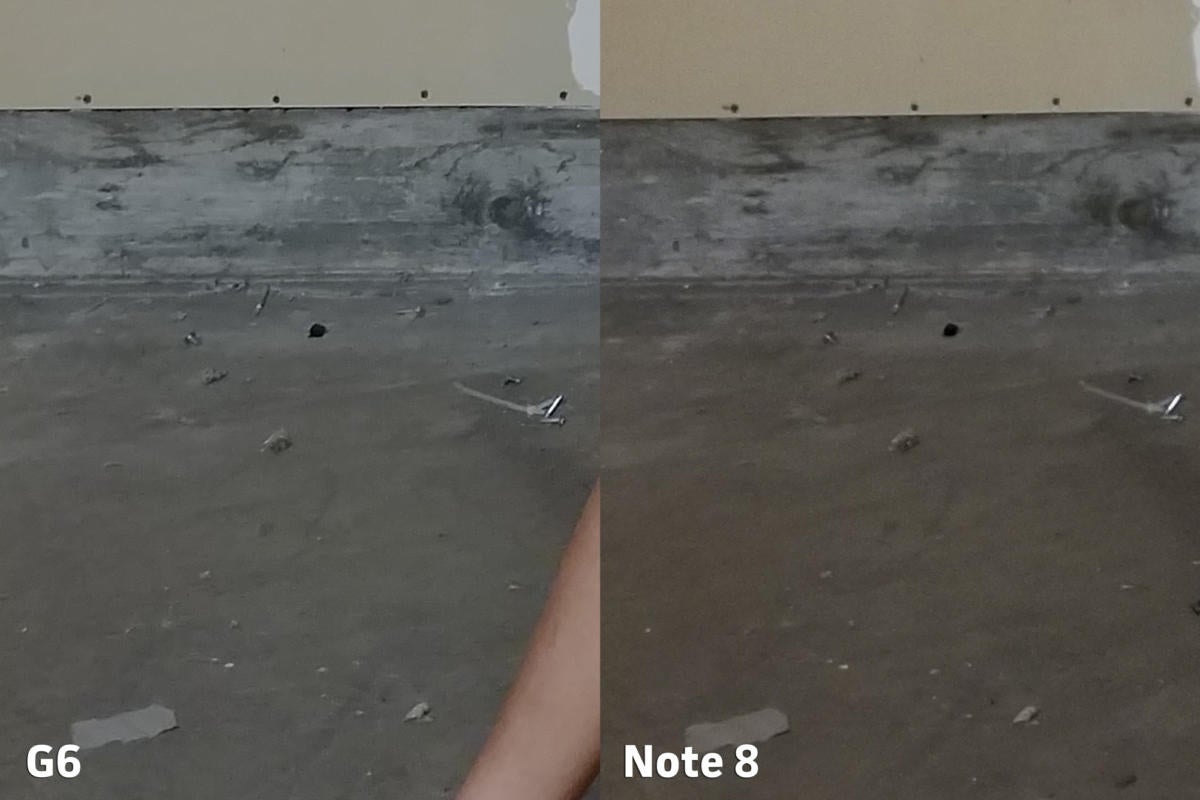
 This basement shooting really tests the strength of the OIS systems' ability to keep the photo sharp during thirster shutter scenarios.
 Adam Saint Patrick Murray/IDG
 Zooming in reveals more texture and tiny inside information exhibit in the G6's photo. Suction stop photo to enlarge.
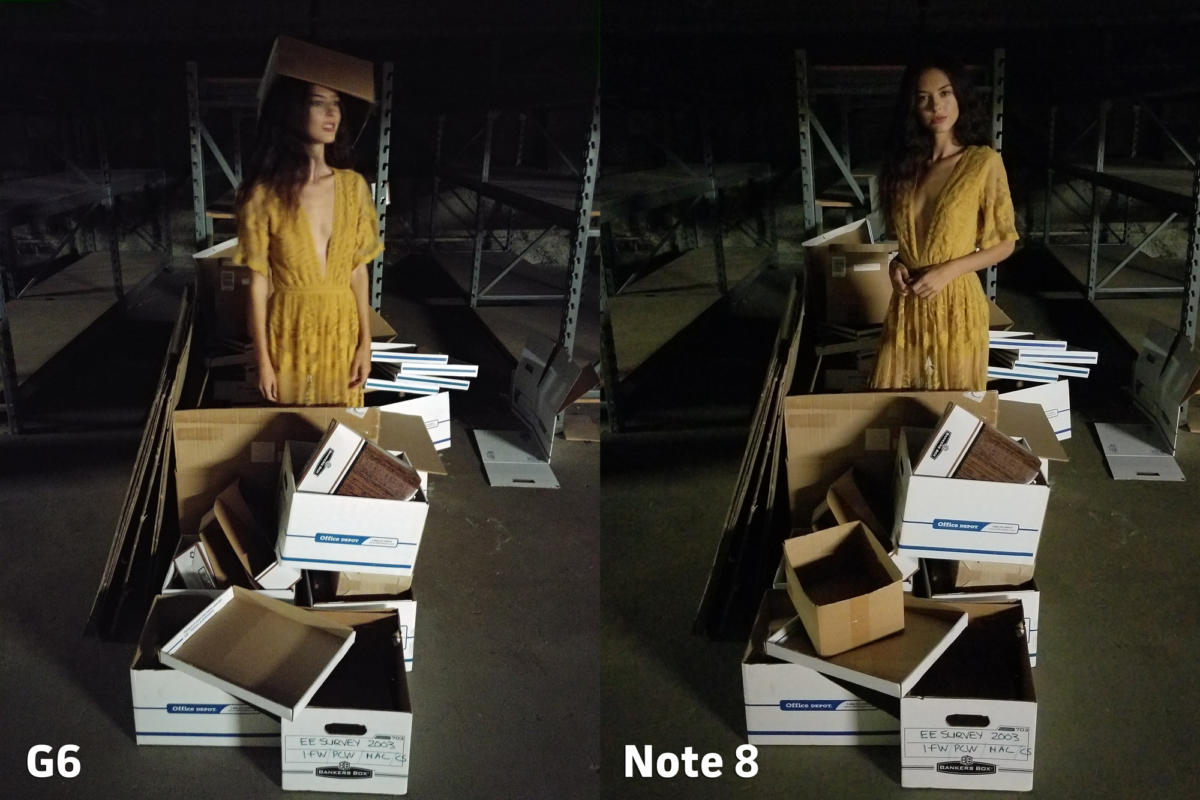
Sol it's really a toss up until we beget into some super low brightness level situations. The Note 8 performs admirably, merely LG's superb OIS kicks in and helps the G6 draw in before.
 Adam Patrick Murray/IDG
 Noise in low light shots Don River't kill a shot for me—sometimes I favor a flake of texture to a aspect.
 Ecstasy St. Patrick Murray/IDG
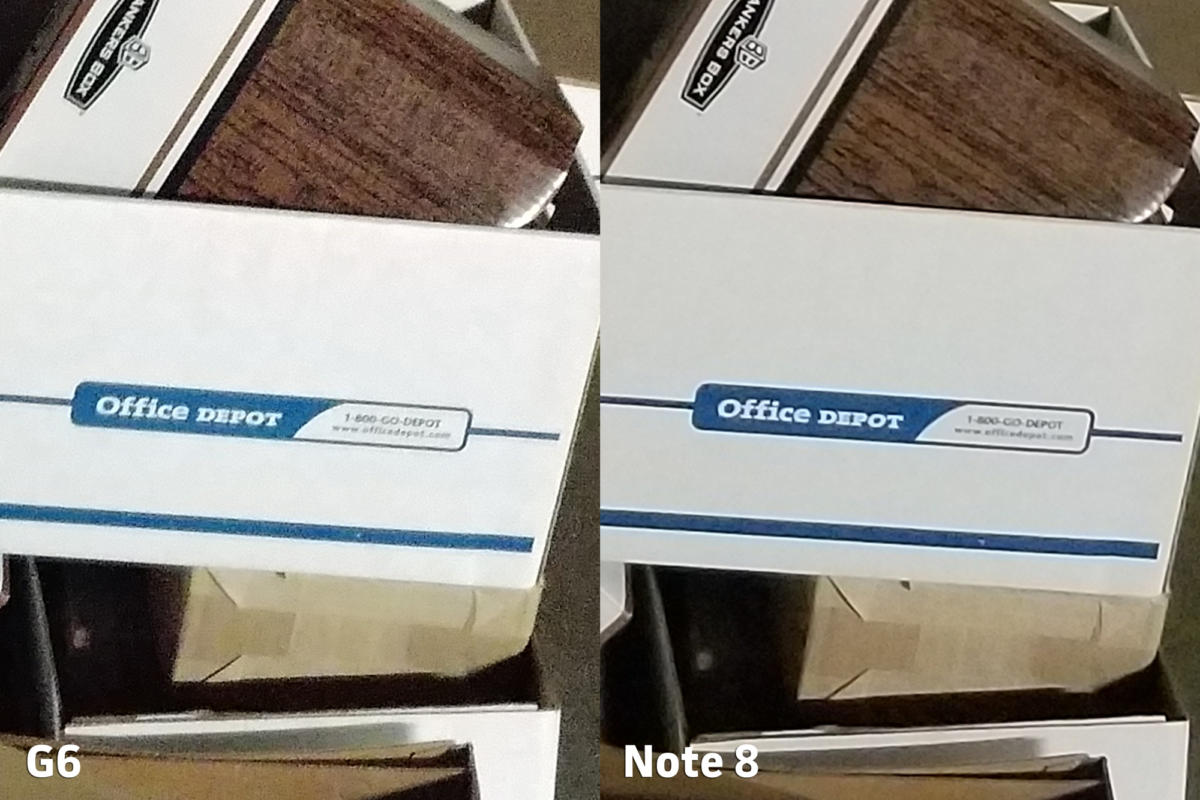
 Because on that point is fewer noise reduction practical to the G6's image, you can make out a bit more detail along the Universal resource locator. Cluck photograph to blow up.
The G6's fancy is noisier in most shots, only that allows it to retain a bit Sir Thomas More detail, the like the website URL.
It's worth noting that the S8 South Korean won this category in its photographic camera showdown, but every aspect presents a different lighting dispute, and this clock time the LG G6 emerges victorious.
Exposure
The next test is photograph, and here we're looking over the moral force range of each camera and how it chooses to expose for a scene.
 Hug dru Patrick Murray/IDG
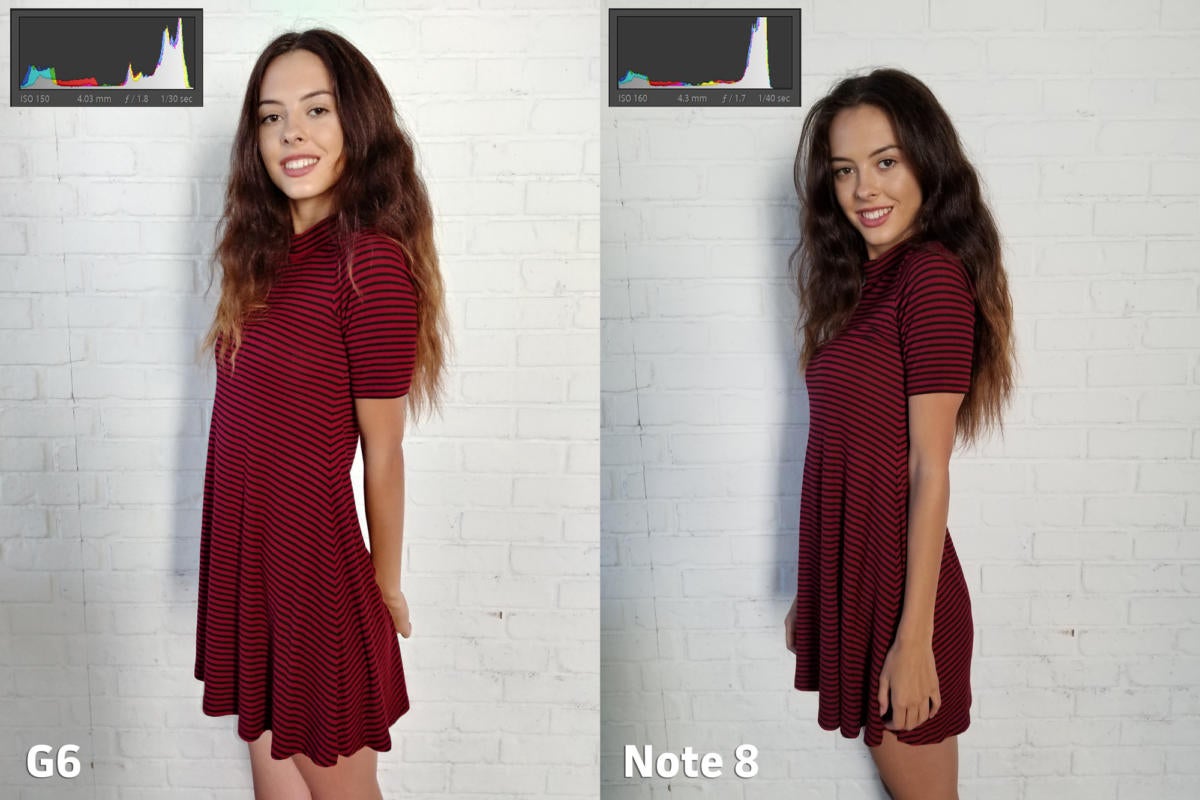
 A fairly straighforward shot against this brick wall reveals a little of whats to occur. The Note 8 systematically underexposes compared to the G6.
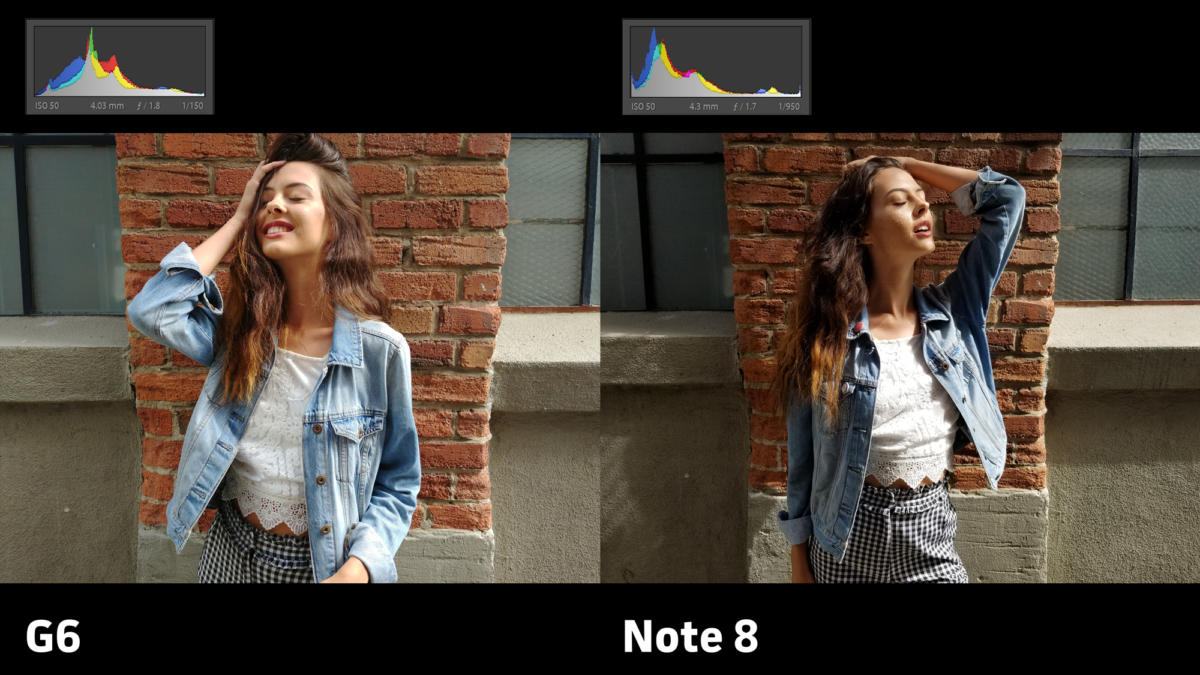 Adam Patrick Gilbert Murray/IDG
 A peak at the Note 8's histogram shows that there is information starting to be confiscate in both the shadows AND the highlights.
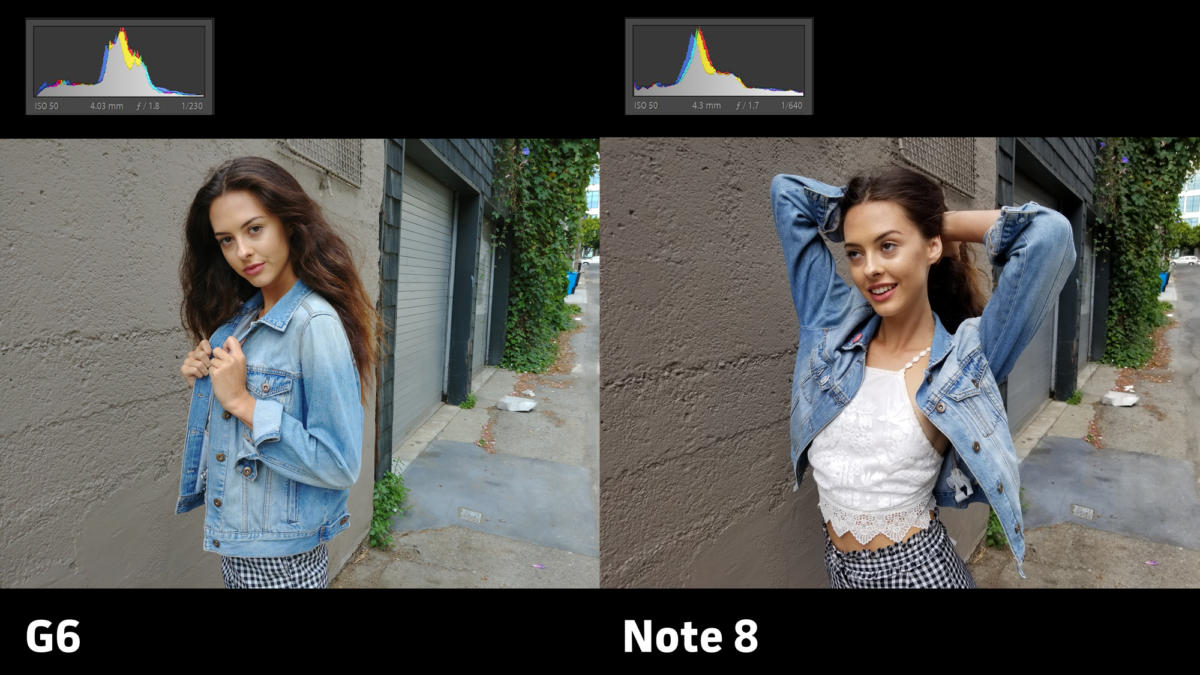 Disco biscuit Patrick Murray/IDG
 Yet another example of the Note 8 slightly underexposing compared to the G6.
Overall, the Note 8 attended underexpose scenes compared to the G6. This is interesting because to begin with this year the S8 was overexposing compared to the G6.
Underexposure is a safer tactic, especially when dealing with high contrast scenarios, but information technology still didn't help the Note 8's chances. In almost every situation, I was competent to pull more data out of the shadows and highlights from the G6.
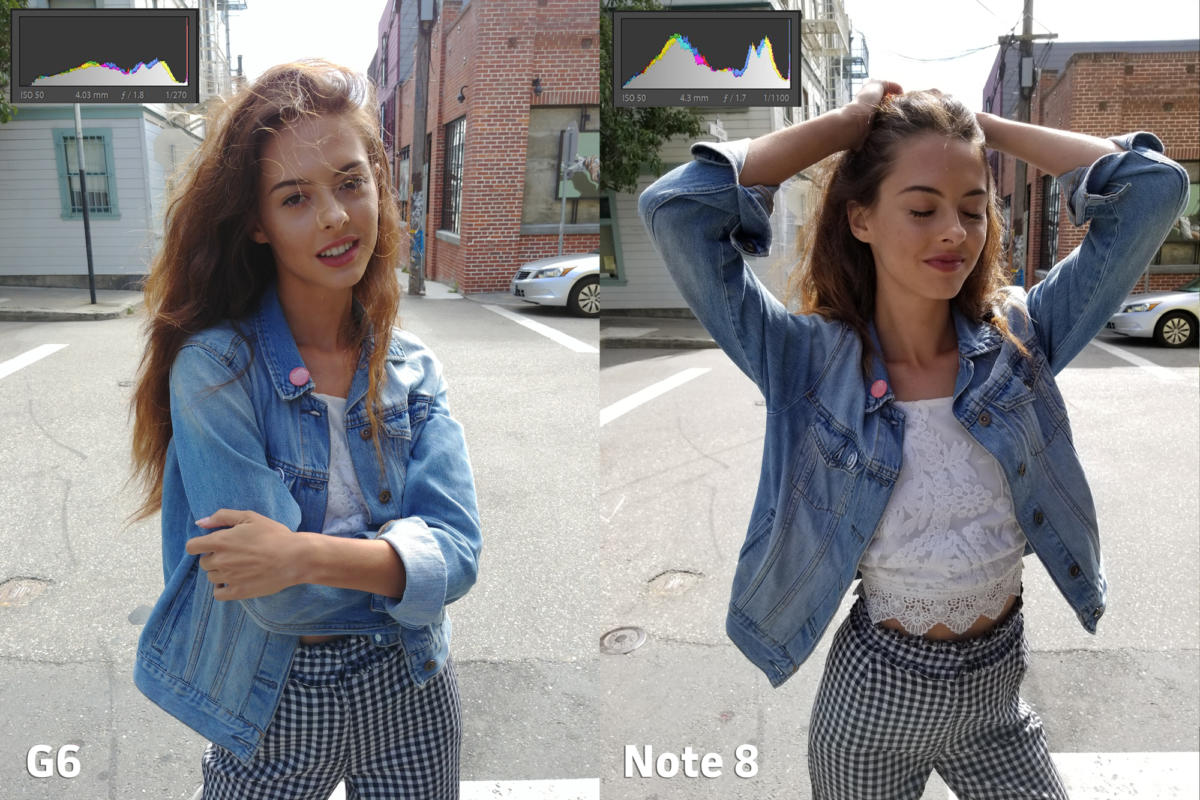 Adam St. Patrick Murray/IDG
 The G6's HDR did not fire in this situation, resulting a washed dead image.
Now don't get ME base, the Note 8 isn't way murder the mark when it comes to exposure. It's just that the G6 nails it almost every time. The only place where it continues to stumble is in knowing when to use HDR.
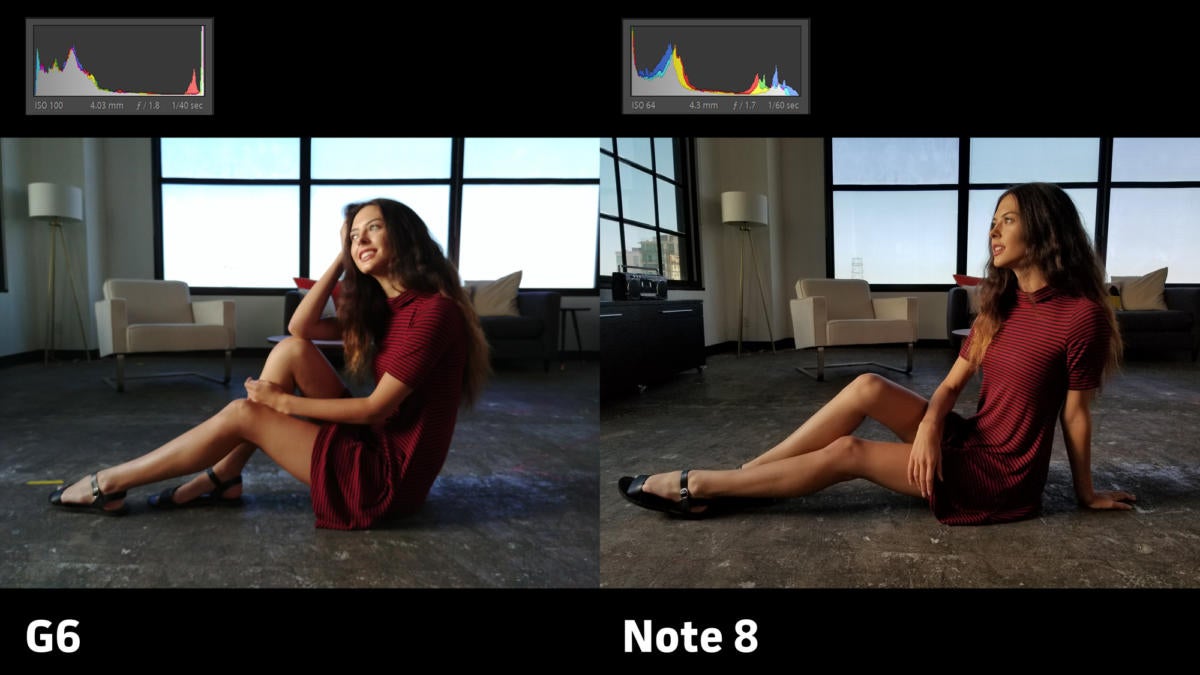 Adam Patrick Murray/IDG
 Backlighting a tantrum is matchless of the hardest situations for a camera to solve, and the G6 typically doesn't do a great job at IT.
In this super high-direct contrast environment, the G6 went between HDR on and off, not every truly nailing it. Despite that, the LG G6 even so takes the exposure category.
User Experience
And now to our last category—user get. Here we go complete all of the new variables of using these phones to demand photos.
In terms of tv camera app fastness, I've forever been impressed with how quickly I potty launch Samsung's default camera. The G6's tired app is starting feel a bit sluggish, but I've been using this headphone for months without a hard readjust, and so I won't ding it for that.
 Adam Saint Patrick Murray/IDG
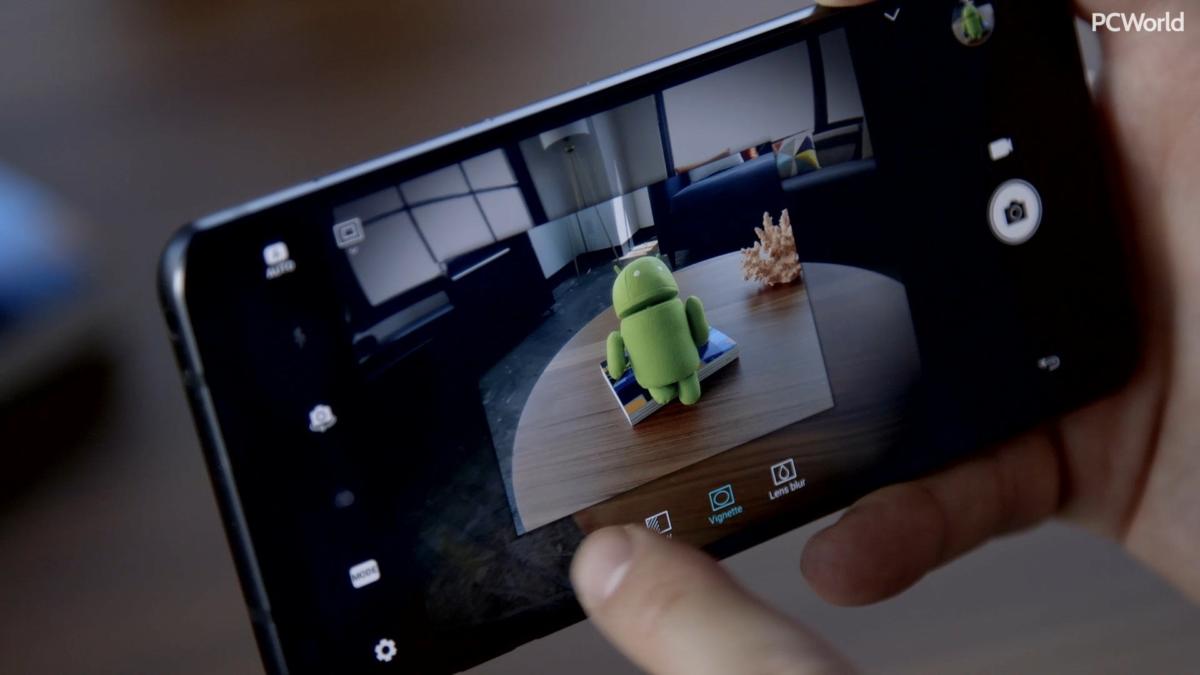
 The extra features in LG's stock camera app are super fun, like the ability to make a exposure using both lenses.
As for features, I've ever loved what LG offers in its stock camera app. From including a histogram in its non-automatic mood to its creative options for the threefold camera setup, the G6 is jam-packed with extras and makes Samsung's app feeling low-level-featured.
 Adam Patrick James Murray/IDG
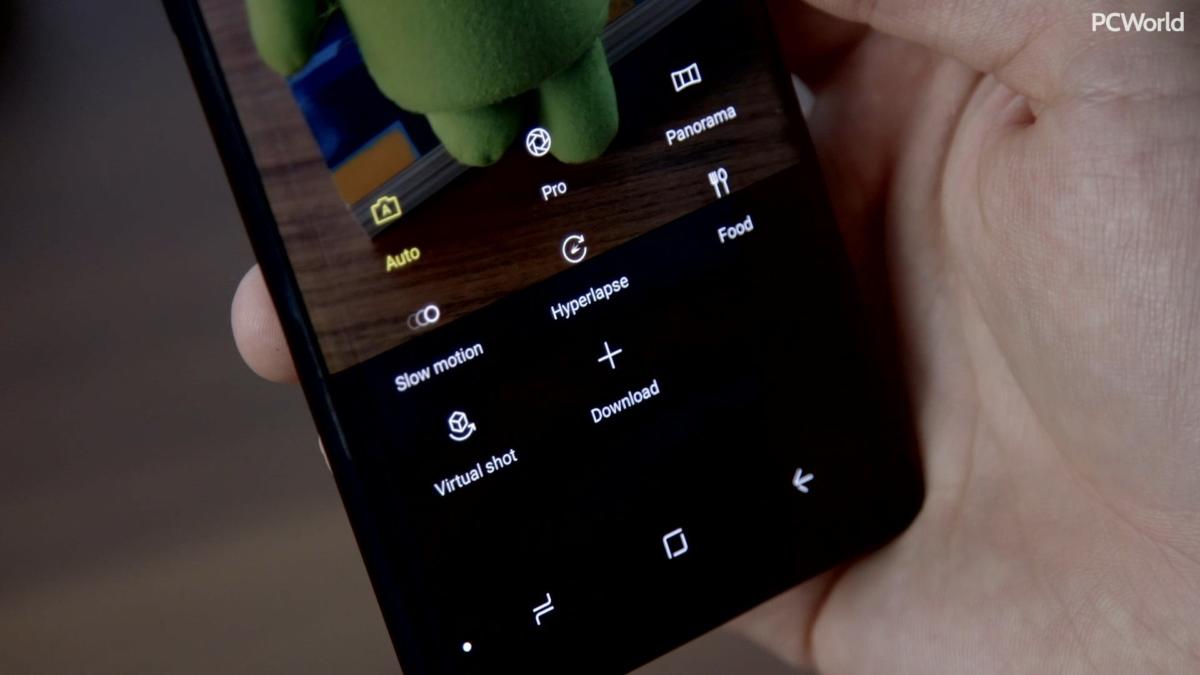
 There are so many different ways to access the features in Samsung's lineage camera app. It can get confusing.
Whatever of Samsung's features are active away a press, patc others are activated past sliding come out of the closet from the edge of the screen, while even more are buried in menus. Information technology's non imitative, it simply feels like a phone experience instead of a photographic camera experience—which is what you mount the G6.
 Adam St. Patrick Murray/IDG
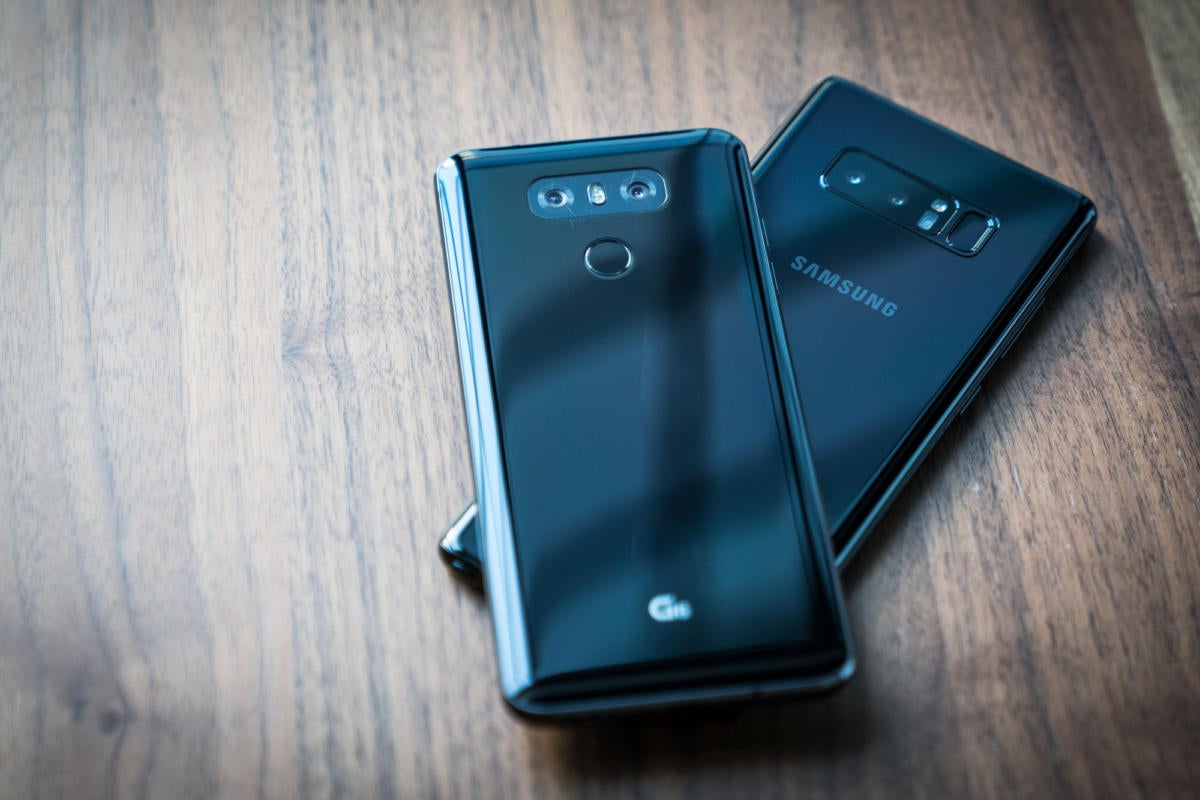
 Samsung and LG both include dual lenses, but with dramatically different spirit.
Samsung and LG as wel choose to get hold of immensely different approaches for their respective second cameras. Samsung went with a telephoto lens while LG stuck with its comprehensive wide angle lens. I actually found plenty of uses for for each one style—the most notable beingness the Animate Centre mode connected the Note 8. This mode introduces bokeh, or blur, to a photo crazy the telephoto camera, and the results are gorgeous.
 XTC Patrick Murray/IDG
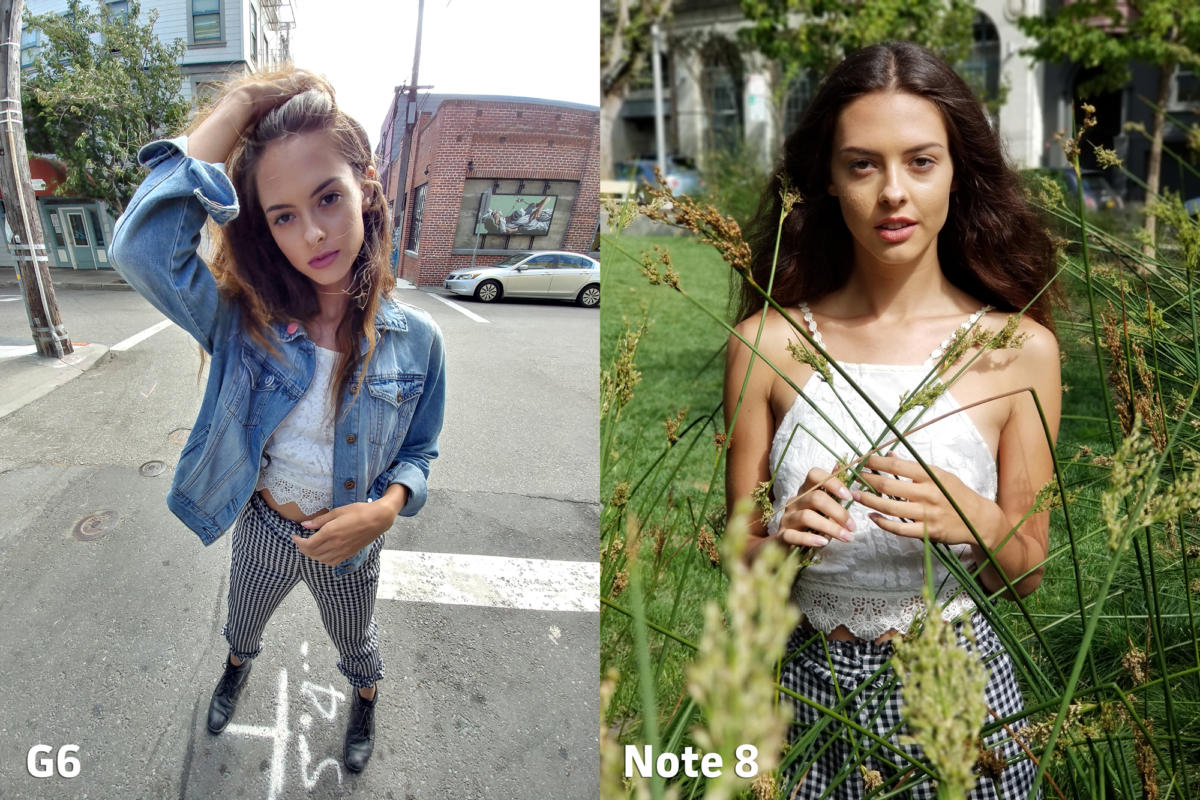
 Samsung's Live Focus musical mode is great when shooting portraits, but I found the comfortable-angle camera along the G6 to be more useful in day-to day-situations.
Happening the other hand, I found myself needing the wide-angle len of the G6 more often in existent-world scenarios. So this prime really boils down to personal preference: Some dual-camera systems are super useful, only I lost having LG's wide lens Sir Thomas More a great deal than than I missed Samsung's telephoto electron lens.
Beat all, using the Note 8 is a great experience and offers some zealous advantages complete the G6. But in the end, I continue to get laid exploitation the LG G6—so that's the camera taking the win in user feel for.
Conclusion
While Samsung has made some improvements to the Note 8 that help it top the S8, it's still not enough to take down the human dynamo that is the LG G6.
LG's G6 features inferior spectacles, but rattling shows its forcefulness in station processing. Photos soft on the G6 feature article natural and lifelike colors and clear and crispen scenes, and wield enough slashing range so you can delete the exposure later in Instagram. Brace that with LG's superb pedigree camera app and optical lens second lense, and you have a phone that has even so to be beaten.
And what a year the G6 has had so far. After taking down the Google Pixel, it went on to defeat the Samsung Galax S8, HTC's U11, and now Samsung's Galaxy Bill 8. We already experience a preproduction manakin of LG's V30 certain testing, so stoppage tuned for that showdown once we get the final rendering in.
Meanwhile, sound out a fewer more brimfull-size examples of what the LG G6 is capable of!
 Adam Patrick Sir James Murray/IDG
  Adam Patrick Murray/IDG
  Adam Patrick Murray/IDG
  Ecstasy Patrick Murray/IDG
  Adam Patrick Murray/IDG
  Adam Saint Patrick Murray/IDG
Source: https://www.pcworld.com/article/407315/galaxy-note-8-vs-lg-g6.html
Posted by: gomeztriated.blogspot.com
0 Response to "Galaxy Note 8 vs. LG G6: Can Samsung beat LG for the camera phone crown? - gomeztriated"
Post a Comment